
Gypsum plaster smooth wall finishing interior construction
Solutions / Gypsum Plaster & Joint Filler

Gypsum Plaster & Joint Filler
Solutions

Performance-focused additive solutions for gypsum plaster and joint filler systems that require smooth application, stable water retention, longer working time, better adhesion, and reliable finishing quality.

Why This Solution
Gypsum-Based System Coverage
Suitable for gypsum-based plaster, gypsum skim finishing, and joint filler systems.
Cellulose Ether & Setting-Control Core
Built around cellulose ether and setting-control additives for balanced processing and finishing performance.
Local Support in Venezuela
Local recommendation, supply coordination, and technical support available in Venezuela.
Gypsum Plaster
Joint Filler
Cellulose Ether
Setting Control
Explore
Section 01

Built for Smooth Finishing
and Controlled Setting

A good gypsum plaster or joint filler must do more than simply cover the surface. It needs to mix smoothly, spread easily, maintain enough working time for finishing, adhere well to the substrate or board surface, and dry into a stable, crack-resistant layer.


In real formulation work, gypsum-based systems are highly sensitive to water balance, setting speed, and application rheology. If the system sets too fast, workers lose finishing time. If water retention is too weak, the plaster can dry unevenly and become difficult to smooth. If the rheology is poorly balanced, application may feel rough, draggy, or unstable.


MikaZone's gypsum-based plaster page explicitly positions HPMC as a multifunctional additive in gypsum plaster that improves workability, adhesion, flexibility, and water retention. Its HEMC pages also directly position several grades for gypsum-based mortars, especially wall putty and machine spray plaster.

Interior gypsum plaster smooth wall finishing construction site
Gypsum · Controlled Setting
Section 02

What a Gypsum-Based Formula
Must Deliver

01
Smooth Workability & Easy Spreading
The product should spread smoothly, level well, and remain easy to trowel or fill into joints. MikaZone explicitly connects HPMC with better workability and adhesive behavior in gypsum applications.
02
Stable Water Retention
Good water retention keeps the mix workable, supports more even structure formation, and reduces the risk of poor finishing caused by premature drying. MikaZone highlights HPMC's water-retention role in gypsum plaster.
03
Controlled Setting Time
Gypsum systems often require a carefully controlled setting window. MikaZone's dedicated Gypsum Plaster Retarder page states that this additive extends the setting time of gypsum-based products.
04
Good Adhesion & Surface Integrity
Adhesion to the base surface or gypsum board is critical. MikaZone states that HPMC improves adhesion, and its PVA product family is publicly positioned for gypsum products as well.
05
Smooth Final Finish
A good gypsum finishing system should create a flat, uniform, visually clean surface. MikaZone's HPMC page says it helps create a seamless flat surface that resists cracking or lumping.
06
Low Foam / Better Finish Quality
In some systems, especially under higher-shear mixing, foam can affect density and appearance. MikaZone lists Defoamer Powder under its construction additives for mortar and related systems.
Section 03

Additives We Recommend for
Gypsum Plaster & Joint Filler

01
HPMC — Core Water-Retention & Workability Additive
Cellulose Ether · Primary Additive
HPMC is the main cellulose ether publicly emphasized by MikaZone for gypsum plaster. MikaZone states that in gypsum plaster, HPMC improves workability, adhesion, flexibility, and water retention. Its general HPMC page also says gypsum plaster applications benefit from HPMC because it creates a more seamless, flat surface and reduces lumping and cracking risk.
Best For
Water retention Workability Adhesion Smooth spreading Better finishing quality
Related Products
02
HEMC — Alternative / Complementary Cellulose Ether
Cellulose Ether · Gypsum Specialist
HEMC is also highly relevant in gypsum-based systems. MikaZone's HEMC product family explicitly positions MK75E, MK100E, MK150E for gypsum-based mortars, while MK100ES / MK200ES are positioned for machine spray plaster and delayed-dissolution use. This makes HEMC especially valuable where the formulation needs stable gypsum-system rheology, balanced water retention, and in some cases delayed dissolution or machine-spray compatibility.
Best For
Gypsum-based mortars Wall finishing systems Machine spray plaster Balanced rheology
Related Products
03
Gypsum Plaster Retarder — Working Time Control
Setting-Control Additive · Functional
For gypsum plaster and joint filler systems, setting-time control is often essential. MikaZone's Gypsum Plaster Retarder page explicitly describes this additive as a highly effective, free-flowing powder designed to extend the setting time of gypsum-based products. This makes it one of the most important functional additives when the plaster sets too quickly, the working window is too short, machine spray application requires more open processing time, or joint filler needs longer workable time for clean finishing.
Best For
Longer working time Better finishing window Stable gypsum setting Machine application
Related Products
GR7011
04
PVA — Adhesion & Film-Forming Support
Polyvinyl Alcohol · Bonding Support
MikaZone publicly positions PVA for gypsum products within its construction additive system. PVA is especially relevant where stronger bonding, better surface integrity, and improved film formation are required. In gypsum plaster and joint filler systems, PVA can be used as a formulation-upgrade additive when better adhesion is needed, the surface needs stronger cohesion, or the finish requires better film strength and smoother integrity.
Best For
Adhesion improvement Surface cohesion Film-forming support Finish-quality enhancement
Related Products
05
HPS — Workability & Rheology Support
Hydroxypropyl Starch Ether · Rheology Modifier
MikaZone publicly lists HPS within its MikaUltra Construction Chemical system, and its gypsum/plaster-related ecosystem positions HPS as a useful rheology modifier in dry-mix systems. It remains a practical optional additive for gypsum-based finishing systems when workability, anti-sag, or surface feel needs fine adjustment.
Best For
Workability tuning Better application feel Thixotropy adjustment Fine finishing control
Related Products
MK1506-A MK1506-B MK2019 MK3009 MK3152 MK3411A MK3411H MK3511 MK3547
06
Defoamer Powder — Optional Foam Control
Process Additive · Optional
MikaZone's dedicated Defoamer Powder product line is presented for mortar, concrete, and grouting. It is a relevant optional additive when gypsum plaster or joint filler systems suffer from excessive foam, air entrapment, pinholes, or poor surface uniformity under mixing.
Best For
Foam-sensitive formulations Better density & finish Reduced pinholes Process stability
Related Products
07
RDP — Optional Upgrade for Special Gypsum Systems
Redispersible Polymer Powder · Premium Upgrade
RDP is not the first-line additive for standard gypsum plaster or joint filler, but it can be relevant in special formulations where stronger adhesion, improved toughness, or upgraded durability are required. MikaZone's broader product system publicly shows RDP as a core modifier used alongside cellulose ethers in construction systems.
Best For
Premium gypsum finishing Difficult substrates Improved toughness
Related Products
Section 04

Recommended Additive Package by
Gypsum Product Category

Standard Gypsum Plaster
The core system usually centers on HPMC or HEMC, with Gypsum Plaster Retarder added where longer working time is needed. MikaZone's gypsum-based plaster page makes HPMC the clearest core additive.
Typical Product Direction
Machine Spray Gypsum Plaster
For spray application, dissolution behavior and processing time are more critical. MikaZone positions MK100ES / MK200ES specifically for machine spray plaster.
Typical Product Direction
HEMC ES grade Gypsum Retarder Defoamer Optional HPS
Joint Filler
Joint filler systems require smooth application, controlled setting, adhesion, and clean finish. HPMC/HEMC + retarder are the key base combination, with PVA added where better cohesion is desired.
Typical Product Direction
HPMC or HEMC Gypsum Retarder PVA Optional Defoamer
Premium Gypsum Finishing Systems
For premium formulations, the additive package can be expanded to include PVA, HPS, and in certain special cases RDP, depending on the substrate, finish target, and adhesion requirement.
Typical Product Direction
HPMC or HEMC Gypsum Retarder PVA HPS Optional RDP
Section 05

Public Reference Guidance
from MikaZone

HPMC for Gypsum
HPMC is directly positioned by MikaZone for gypsum-based plaster and noted for workability, adhesion, flexibility, and water retention.
HEMC Grades
HEMC / MHEC grades such as MK75E, MK100E, MK150E are publicly tied to gypsum-based mortars; MK100ES / MK200ES are tied to machine spray plaster.
Gypsum Retarder
Gypsum Plaster Retarder is directly positioned by MikaZone as a gypsum-setting-time extender, designed as a highly effective, free-flowing powder.
Important Note: The indexed snippets in this pass did not expose a full unified dosage table for gypsum plaster / joint filler additives. Final dosage should therefore be confirmed through formulation testing, raw material review, and TDS-based evaluation.
Section 06

Selection Logic for
Gypsum Plaster & Joint Filler

At Mandalas, we recommend gypsum additives based on:
Product type Application method Working time target Smoothness & finish Adhesion need Special upgrades Trial feedback
Typical Recommendation Flow
1
Define whether the product is standard gypsum plaster, spray plaster, or joint filler.
2
Select the core cellulose ether system.
3
Add gypsum retarder to reach the target working time.
4
Add PVA, HPS, or defoamer as needed for finish quality, workability, or foam control.
5
Validate through lab and plant trials.
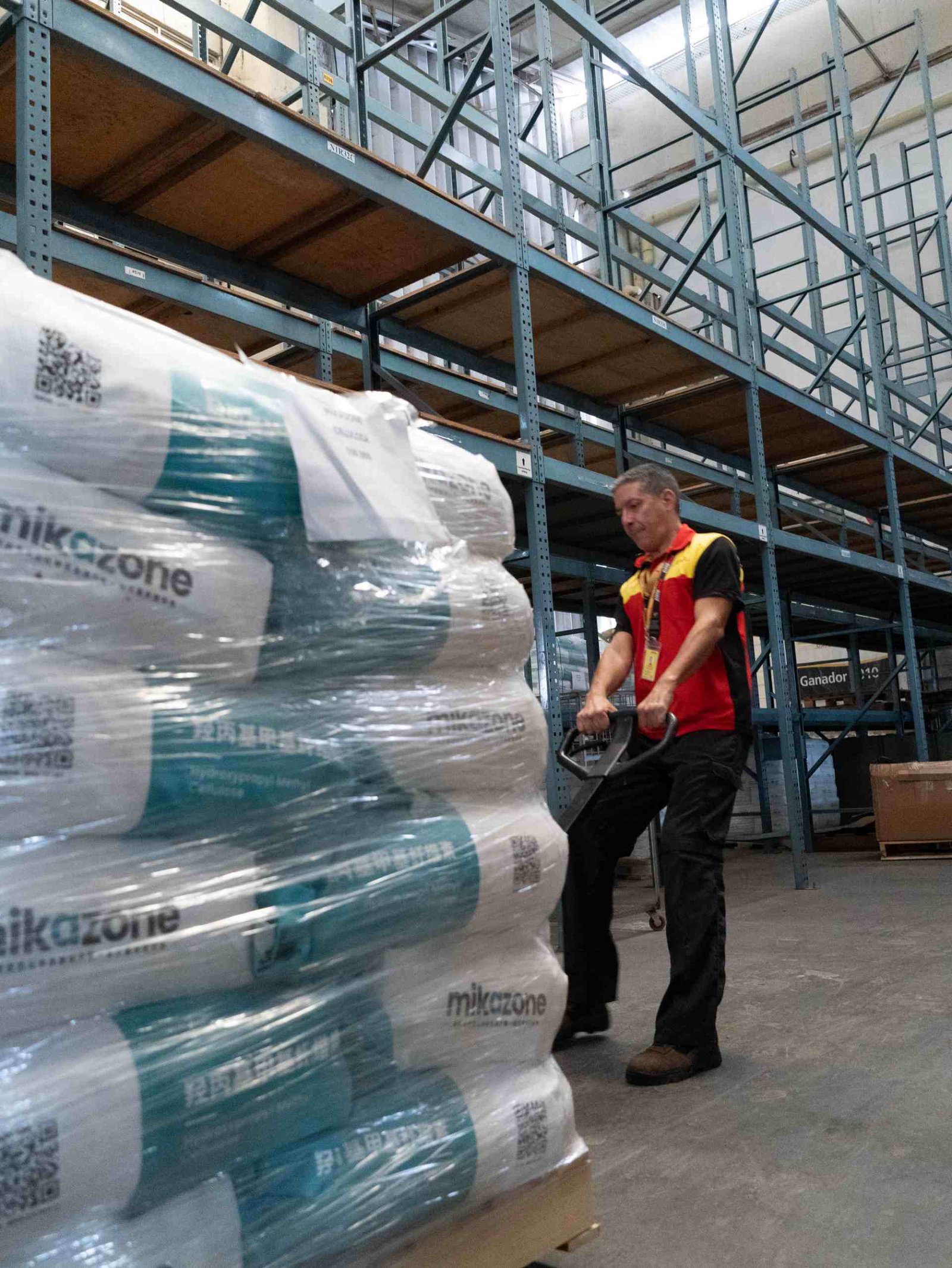
Warehouse supply coordination for construction chemical additives
Section 07

Why Choose Mandalas for
Gypsum Formulation Support

We help build a gypsum-system package around the actual processing and finishing target, rather than recommending one additive in isolation.

What We Help With
Standard gypsum plaster improvement
Longer working time control
Machine spray gypsum systems
Joint filler optimization
Better smoothness and finish quality
Trial support and formula adjustment
What We Supply for Gypsum Applications
HPMC HEMC Gypsum Retarder PVA HPS Defoamer Optional RDP
Section 08

Gypsum Plaster & Joint Filler FAQ

Q1
What is the most important additive in gypsum plaster?
According to MikaZone's gypsum-based plaster page, HPMC is a core multifunctional additive because it improves workability, adhesion, flexibility, and water retention.
Q2
Which additive controls gypsum setting time?
Gypsum Plaster Retarder is the dedicated setting-time control additive in MikaZone's MikaUltra system.
Q3
Which grades are suitable for machine spray plaster?
MikaZone publicly positions MK100ES and MK200ES as modified HEMC grades for gypsum-based mortars, especially machine spray plaster.
Q4
Is PVA useful in gypsum systems?
Yes. MikaZone's product system publicly positions PVA for gypsum products, making it relevant where adhesion and film strength need improvement.
Q5
Can you recommend dosage ranges?
Yes. We can suggest a practical starting range based on your gypsum application, setting-time target, and raw-material structure.
Get Started

Need the right additive package for your
gypsum plaster or joint filler?

Tell us whether you are developing a standard gypsum plaster, machine spray plaster, or joint filler system. We'll recommend the right product combination and starting selection logic to help you begin trials faster and reach stable results sooner.

1 Chat with us