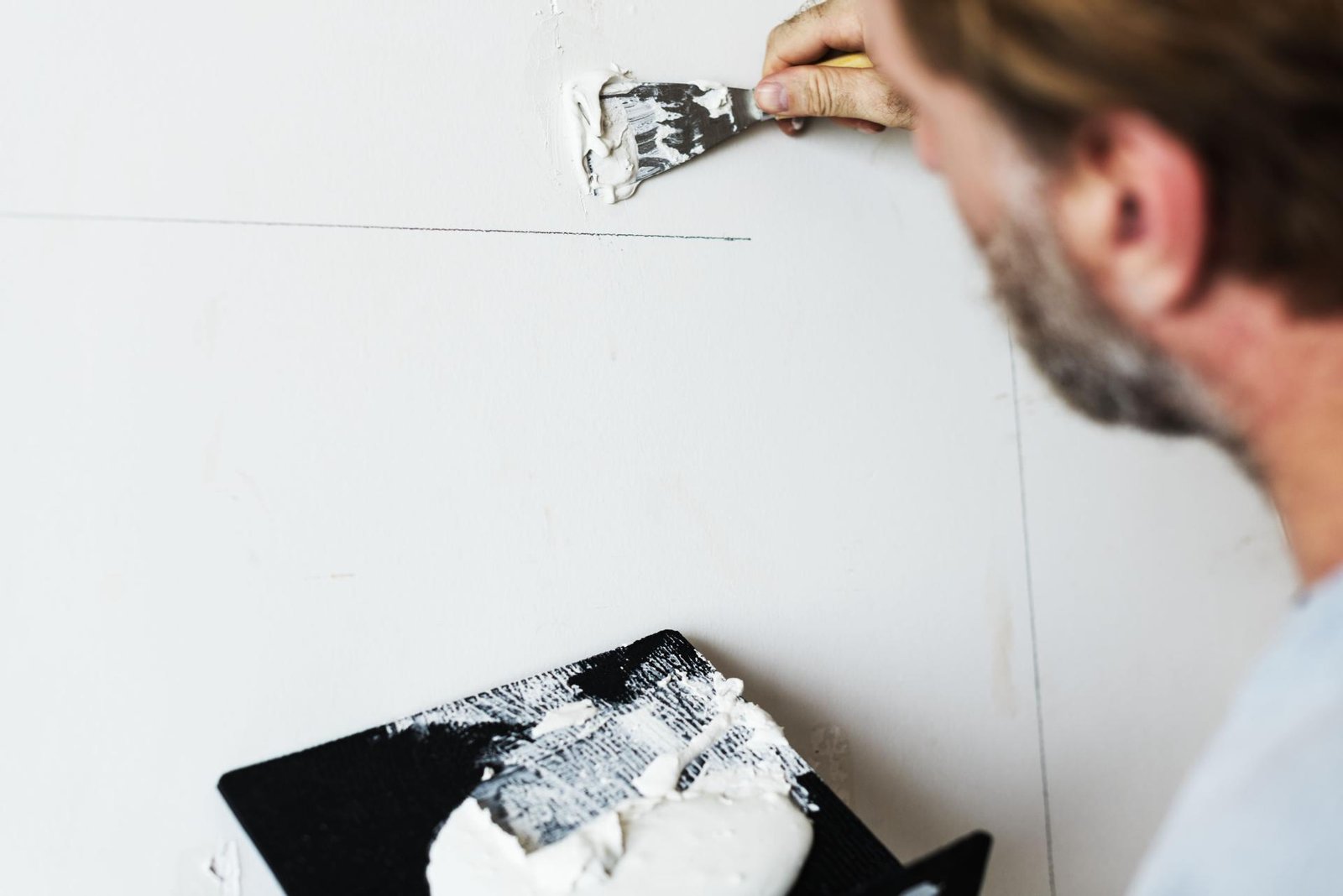
Wall putty skim coat application on building surface
Solutions / Wall Putty & Skim Coat

Wall Putty & Skim Coat
Solutions

Performance-focused additive solutions for wall putty and skim coat systems that require smooth application, strong adhesion, better water retention, improved workability, and more reliable crack resistance.

01
Interior & Exterior Systems
Suitable for interior and exterior wall putty, skim coat, and gypsum-based finishing systems.
02
Balanced Performance Additives
Built around cellulose ether, RDP, HPS, and selected functional additives for balanced performance.
03
Local Support in Venezuela
Local recommendation, supply coordination, and technical support available in Venezuela.
HPMC / HEMC
RDP
HPS Starch Ether
Functional Additives
Explore
Section 01

Built for Smooth Finishing
and Reliable Surface Performance

A good wall putty or skim coat is not only easy to spread. It must also maintain consistent workability, adhere well to the base surface, resist cracking, and create a smooth, durable finishing layer ready for painting or further decoration.


In practical formulation work, putty performance depends on the balance between the binder system, fine fillers, water-retention additives, polymer modifiers, and process-support additives. MikaZone's wall putty application page directly highlights the most common pain points in putty systems: weak adhesion, poor thixotropy, poor waterproof effect, difficult construction, and low strength. It then presents HPMC/HEMC, RDP, and HPS as key additive solutions for these problems.


For higher-grade systems, especially exterior wall putty or waterproof wall putty, additional modifiers such as PCE or polypropylene fiber can become important to improve crack resistance, dimensional stability, and moisture-related durability.
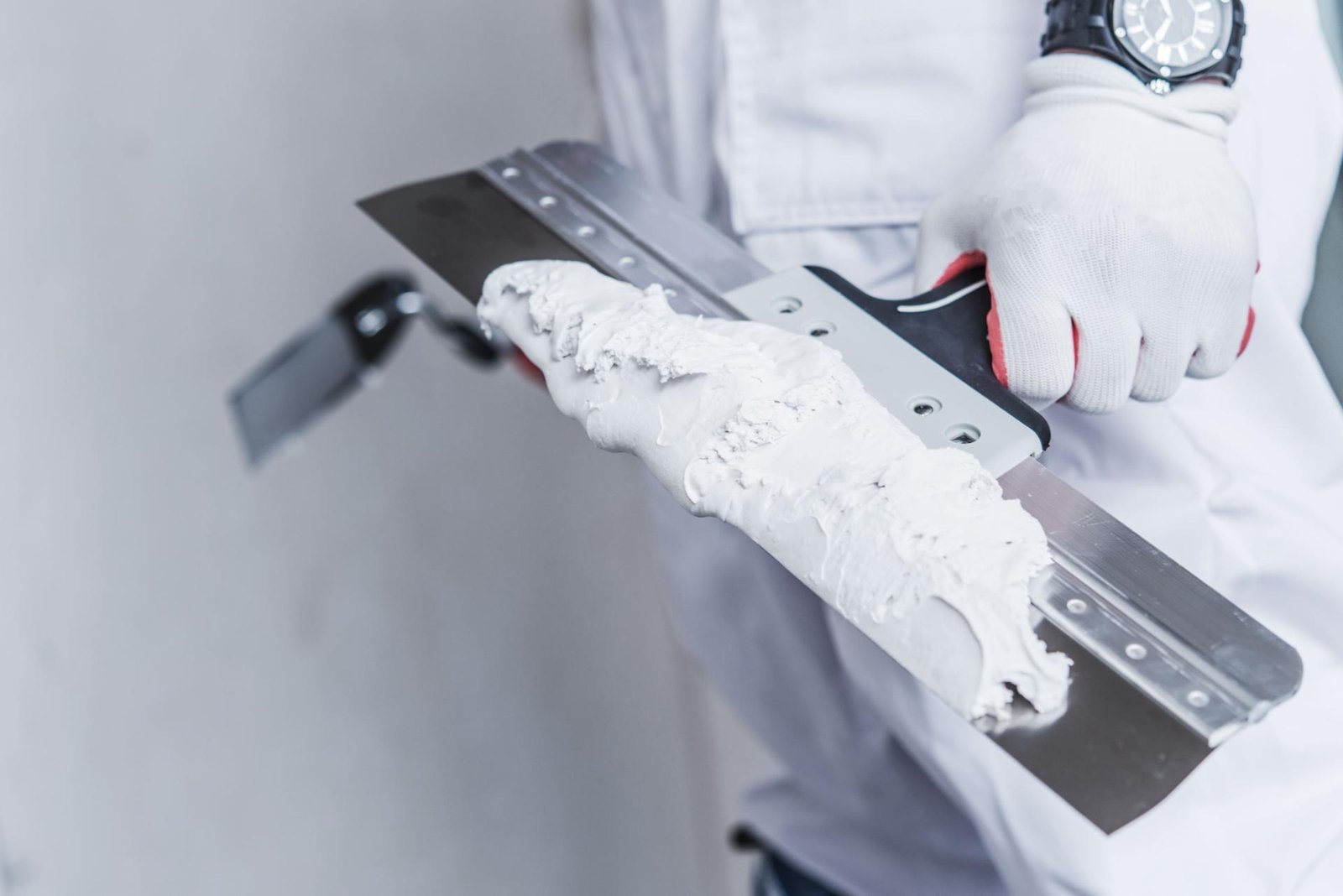
Construction worker applying wall putty with trowel for smooth finishing
Smooth Finishing & Performance
Section 02

What a Wall Putty or Skim Coat
Formula Must Deliver

Smooth Workability & Easy Application
The product must spread easily, level well, and allow efficient troweling with a smooth final finish. MikaZone states that HPMC/HEMC and HPS significantly improve workability and surface smoothness.
Strong Water Retention
Stable water retention prevents premature drying and ensures better cement hydration and finish quality. MikaZone explicitly presents HPMC/HEMC as high-water-retention solutions for both interior and exterior wall putty.
Good Open Time
A longer open time helps workers finish the surface more efficiently and reduces construction difficulty. MikaZone highlights this as one of the main contributions of HPMC/HEMC in wall putty systems.
Better Adhesion
Putty must adhere well to the wall surface without pulling on the trowel or failing at the substrate interface. MikaZone identifies poor adhesion as a major putty problem and presents RDP and HPS as part of the solution.
Anti-Crack & Strength Performance
For exterior or demanding systems, crack resistance and surface strength become critical. MikaZone notes that polypropylene fiber is used in exterior wall putty, while RDP, HPMC, and PCE support premium systems.
Waterproof / Moisture-Resistant Performance
Exterior and waterproof putty systems need lower water sensitivity and better durability under humid conditions. MikaZone explicitly distinguishes exterior/waterproof putty from standard interior putty on this basis.
Section 03

Additives We Recommend for
Wall Putty & Skim Coat Formulations

01
HPMC — Core Water-Retention & Workability Additive
Cellulose Ether · Primary Additive
HPMC is one of the main cellulose ethers used in wall putty systems. MikaZone's wall putty application page identifies HPMC/HEMC as the core solution for open time, water retention, thickening, and lubrication, and specifically recommends MK40P, MK75P, and MK100P for wall putty. It also publishes typical Brookfield viscosity references: MK40P: 20,000–25,000 mPa·s; MK75P: 35,000–55,000 mPa·s; MK100P: 45,000–55,000 mPa·s in 2% solution at 20°C.
Best For
Water retention Open time Thickening Lubrication Smoother spreading
Related Products
02
HEMC — Alternative / Complementary Cellulose Ether
Cellulose Ether · Alternative
HEMC is also directly recommended by MikaZone for wall putty. Its wall putty page specifically lists MK75E and MK100E as recommended grades, with public viscosity references of 35,000–45,000 mPa·s for MK75E and 45,000–55,000 mPa·s for MK100E. MikaZone positions HEMC for the same key putty functions: water retention, thickening, and lubricity.
Best For
Wall putty & skim coat Stable water retention Balanced rheology Smooth application feel
Related Products
03
RDP — Adhesion, Strength & Durability Upgrade
Redispersible Polymer Powder · Performance Upgrade
MikaZone's wall putty application page explicitly lists RDP as a wall putty additive and shows recommended RDP grades: MK1610N, MK3510N, MK3520N, and MK8025H, together with their public MFFT references of 5°C / 0°C / 0°C / 0°C respectively. This clearly positions RDP as an important additive when you need stronger adhesion, better durability, and improved overall strength. MikaZone's waterproof wall putty article states that premium waterproof wall putty uses RDP together with HPMC and PCE.
Best For
Better adhesion Improved strength Enhanced durability Waterproof systems Exterior-grade upgrades
Related Products
04
HPS — Workability & Surface Smoothness Enhancer
Hydroxypropyl Starch Ether · Workability Enhancer
MikaZone's wall putty application page and HPS product page both position Hydroxypropyl Starch Ether (HPS) as a key additive for skim coat / wall putty. It states that HPS offers excellent rapid thickening, low dosage with effective results, great anti-sagging ability, and improved workability and smoother construction. This makes HPS especially useful when the putty needs better application feel, smoother finishing, or improved thixotropy.
Best For
Better workability Surface smoothness Anti-sag support Thixotropy adjustment Finishing quality
Related Products
05
PVA — Adhesion & Film-Forming Support
Polyvinyl Alcohol · Bonding Support
MikaZone's PVA page explicitly lists wall putty among its main construction applications and states that PVA improves bonding strength, film formation, and fluidity in wall putty, dry-mix mortar, gypsum products, and tile adhesives. This makes PVA relevant when you want stronger surface integrity and a more cohesive finishing layer.
Best For
Adhesion upgrade Film formation Smoother finish Surface integrity
Related Products
06
PP Fiber — Crack Resistance Support for Exterior Systems
Polypropylene Fiber · Structural Reinforcement
MikaZone's article on interior vs exterior wall putty specifically states that exterior wall putty requires polypropylene fiber for crack resistance under UV exposure, rain, and temperature fluctuations. This is a strong, direct signal that PP fiber belongs in more demanding exterior or anti-crack putty systems.
Best For
Exterior wall putty Crack-resistant skim coat Dimensional stability Durable exterior finishing
Related Products
07
PCE — Premium Waterproof / High-Performance Putty Upgrade
Polycarboxylate Ether · Premium Upgrade
MikaZone's waterproof wall putty article states that premium waterproof wall putty uses RDP, HPMC, and PCE. This makes PCE relevant when a putty system needs better density, improved process behavior, or stronger premium performance positioning, especially in water-resistant formulas.
Best For
Waterproof wall putty Premium formulations Density optimization Stronger positioning
Related Products
Section 04

Recommended Additive Package
by Putty Category

Interior Wall Putty
For standard interior systems, MikaZone's articles emphasize HPMC/HEMC as the core additives, with HPS as an important workability enhancer. RDP may be used when more adhesion or durability is needed, but it is not always required in basic economy systems.
Typical Product Direction
Exterior Wall Putty
Exterior systems must resist weather, temperature change, and cracking. MikaZone explicitly notes that exterior wall putty uses polypropylene fiber for crack resistance, and highlights cellulose ether + RDP + HPS as the performance upgrade package.
Typical Product Direction
HPMC or HEMC RDP HPS PP Fiber Optional PVA
Waterproof Wall Putty
MikaZone's waterproof wall putty article draws a clear distinction between premium waterproof putty and basic interior systems, citing RDP, HPMC, and PCE as the premium additive package.
Typical Product Direction
HPMC RDP PCE Optional HPS Optional PP Fiber
Skim Coat / Fine Finishing Putty
For skim coat systems focused on easy spreading and smooth finish, MikaZone places special emphasis on HPMC/HEMC + HPS. These additives control water retention, smoothness, and thixotropy, which are critical to finishing quality.
Typical Product Direction
HPMC or HEMC HPS Optional PVA
Section 05

Public Reference Guidance
from MikaZone

Recommended HPMC / HEMC Grades
Grade Viscosity (2%, 20°C) Type
MK100P 45,000–55,000 mPa·s HPMC
MK75P 35,000–55,000 mPa·s HPMC
MK40P 20,000–25,000 mPa·s HPMC
MK100E 45,000–55,000 mPa·s HEMC
MK75E 35,000–45,000 mPa·s HEMC
Recommended RDP Grades
Grade MFFT Application
MK1610N 5°C Wall Putty
MK3510N 0°C Wall Putty
MK3520N 0°C Wall Putty
MK8025H 0°C Wall Putty
Important Note: MikaZone's indexed snippets did not expose a single universal dosage table for wall putty additives on this pass, so final dosage should be confirmed by your raw materials, binder structure, and target performance through formulation trials.
Section 06

Selection Logic for
Wall Putty & Skim Coat
Formulations

At Mandalas, we recommend putty additives based on:

Interior or exterior use Standard, waterproof, or premium Required smoothness & workability Adhesion target Crack resistance need Moisture resistance Trial feedback
Typical Recommendation Flow
1
Define whether the product is interior putty, exterior putty, waterproof putty, or skim coat.
2
Select the core cellulose ether system.
3
Add HPS to improve smoothness and workability if needed.
4
Add RDP when better adhesion, durability, or premium positioning is required.
5
Add PP fiber for crack resistance in exterior systems, or PCE for premium waterproof systems.
6
Validate with lab and plant trials.
Warehouse logistics and supply coordination for construction additives
Section 07

Why Choose Mandalas for
Wall Putty & Skim Coat
Formulation Support

We do not treat putty as a single-product application. We help build a full additive package based on the actual performance target of your putty line.

What We Help With
Interior wall putty improvement
Exterior wall putty upgrade
Waterproof wall putty formulation
Skim coat smoothness and finishing optimization
Crack-resistance enhancement
Trial support and formula adjustment
What We Supply for Wall Putty
HPMC HEMC RDP HPS PVA PP Fiber PCE
Section 08

Wall Putty & Skim Coat FAQ

Q1
What is the most important additive in wall putty?
For most putty systems, cellulose ether is the core additive because it controls water retention, thickening, lubrication, and open time. MikaZone's wall putty page specifically presents HPMC/HEMC in this role.
Q2
Which grades does MikaZone recommend for wall putty?
MikaZone publicly recommends MK100P, MK75P, MK40P, MK100E, and MK75E for wall putty, with published viscosity ranges.
Q3
Which additives improve crack resistance in wall putty?
For exterior wall putty, MikaZone explicitly mentions polypropylene fiber for crack resistance. RDP also helps improve durability and strength in higher-performance putty systems.
Q4
Which additives are used in waterproof wall putty?
MikaZone's waterproof wall putty article specifically cites RDP, HPMC, and PCE in premium waterproof wall putty systems.
Q5
Can you recommend dosage ranges?
Yes. We can suggest a practical starting range based on your putty type, raw materials, and target performance.
1 Chat with us